
What if I told you that you could wake up in a different European city every morning, walk off the ship straight into the heart of town, never fight crowds getting on or off, and unpack only once? Forget massive cruise ships with water slides and thousands of people. River cruising slows everything down, and honestly, it’s one of my favorite ways to see Europe.
Here’s what a river cruise is really like, which river to choose, who it’s for, whether it’s worth the money and the tips I give every first-timer.
What Is a River Cruise, Really?
It’s not what you’re picturing. When people hear “cruise,” they usually think of a giant ship in the Caribbean, or, on the other end, some little boat with a couple of rooms. In Europe, river cruising is a completely different experience. Think of it as a floating boutique hotel.
Most river ships carry only about 100 to 190 passengers. I’ll say that again, because it might shock you: 100 to 190 passengers. That’s nothing. So there are no long buffet lines, no elevators packed with hundreds of people and no waiting 20 minutes just to get off the ship.
Instead, you dock right in the center of town, and this is one of the reasons I absolutely love river cruising. There’s no wondering how far away the city is or whether you’ll have to take a bus all the way in. In many places, you walk off the ship and you’re standing in the historic downtown.
And it’s so peaceful. There’s no wake and no waves. Imagine having your morning coffee while floating past medieval castles on the Rhine, vineyards stretching for miles in France or colorful villages along the Danube.
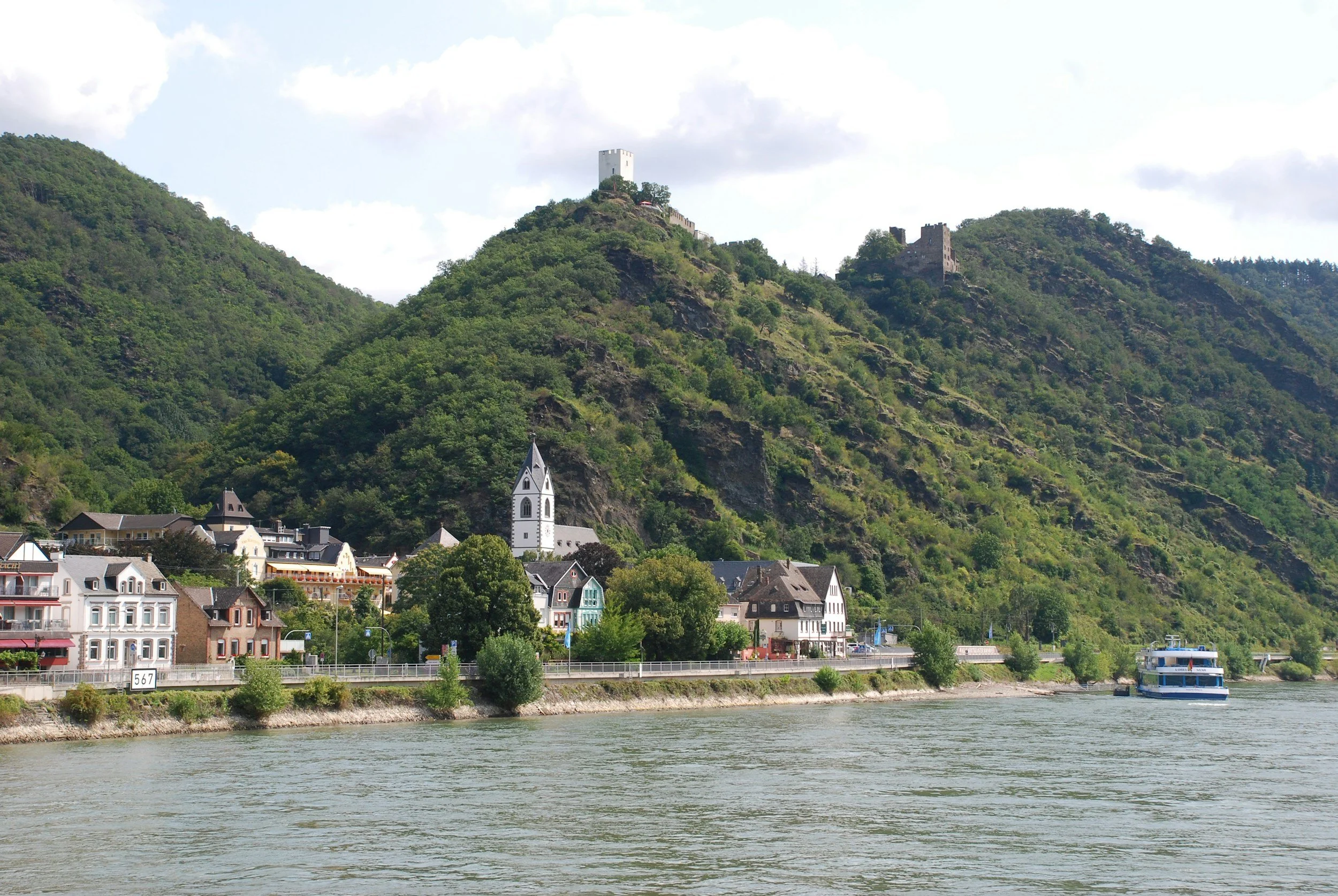
On a river cruise, the ship docks right in town. (Stock photo)
The Ship Isn’t the Destination
To be honest, there isn’t much to do on the ship itself, and that’s on purpose. The cruise lines don’t want you on the ship. They want you off it, experiencing the cities you’re traveling to, not hanging out on water slides or by the pool.
Most river ships don’t have a pool at all. A few have small indoor pools (that’s rare, so if it matters to you, do your research), and a couple have hot tubs up top. The very top deck is usually an open-air sun deck, and that’s where a lot of the sitting happens. Depending on the ship, you might even have meals up there, and some do a whole grill night, which I think is really cool. There are fun events on board, but the ship is not the point. It’s about where the ship takes you.
How Excursions Work (and My Favorite Trick)
A lot of river cruises include excursions, and then offer extra excursions you pay for. The paid ones are a little more adventurous and usually take you outside of town. The included ones are typically short guided walks around town, where a guide explains the history and the main sights.
That timing is what I love. You get your little guided tour, and once they tell you you’re good to go, you get to go experience the town yourself: find the little coffee shops and the nooks and crannies you missed on the tour. Yes, you’ll see all the famous sights on your route (in Cologne, you’ll see the cathedral), but you also get to make your own memories. The dinner spot that was amazing, the café with the best coffee you’ve ever had, the shop you just happened to walk into.
Don’t Rush Back to the Ship in Melk
Everyone talks about Paris and Rome, but let’s talk about Europe’s magical little towns. Most Danube cruises stop in Melk, Austria, where Melk Abbey towers above the river. It’s over 900 years old, and the library alone looks like something out of Harry Potter.
Here’s my favorite part: instead of rushing back to the ship after the excursion, stay behind for an hour. Walk the tiny streets, grab a coffee at a local café and browse the little shops. Most travelers never venture beyond the main square, but those quiet side streets are where Austria feels authentic, and those moments become your favorite memories.
Good to know (checked October 2026): Melk Abbey has been a Benedictine monastery since 1089. The baroque abbey and library you see today date from the early 1700s.
Which River Is Right for You?
The Danube: Perfect for First-Timers
Honestly, the Danube and the Rhine both have all the greats, so it’s hard to pick. But if Europe is on your bucket list, the Danube is a great start. Think Vienna, Budapest, Bratislava and Passau, plus music, castles and a ton of history.
And Vienna is where I had the best Wiener schnitzel of my entire life. I went twice on that trip. (More on that below.)
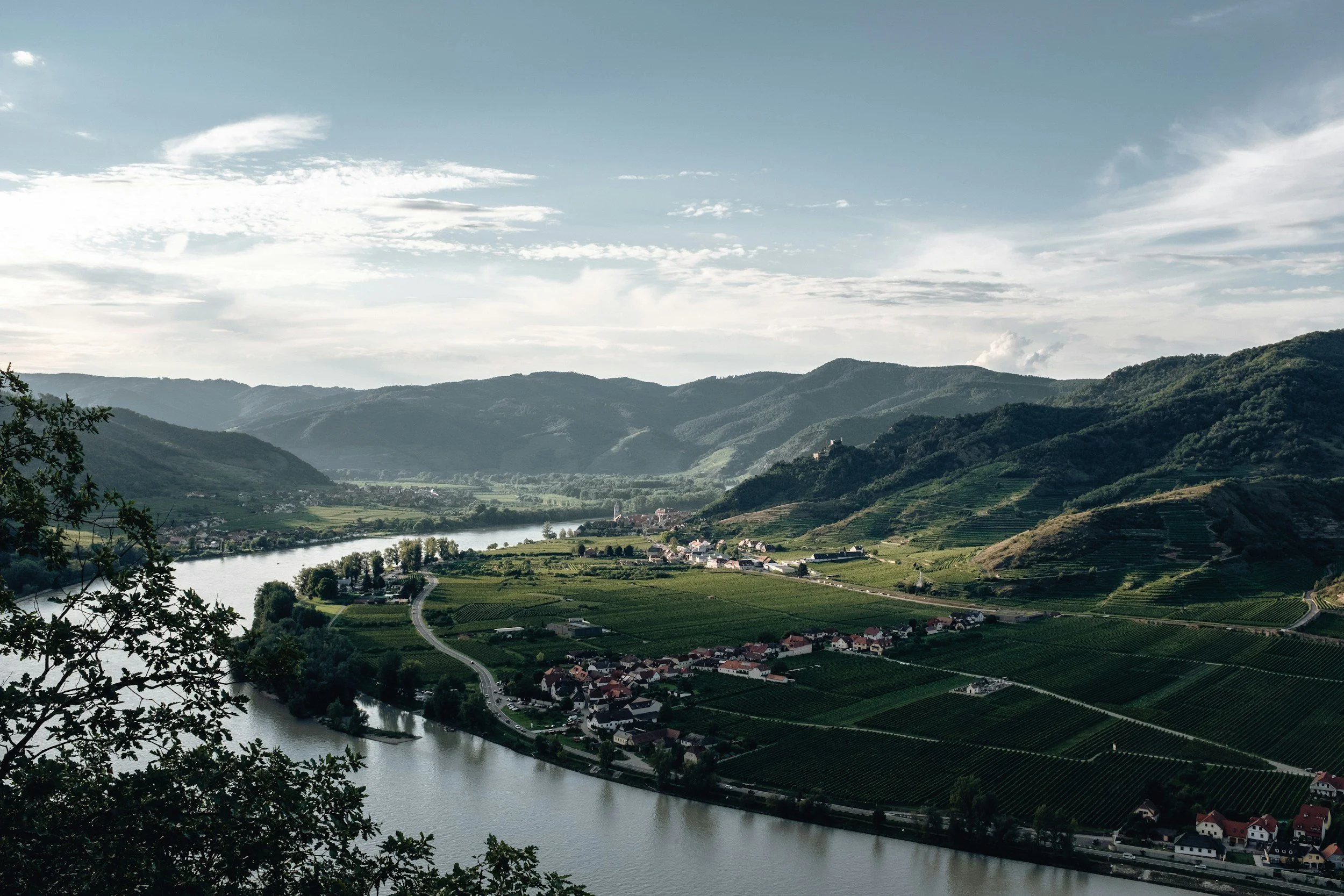
The Danube in Austria’s Wachau Valley. (Stock photo)
The Rhine: Postcard Europe
The Rhine runs between Amsterdam and Basel, and you can sail it in either direction. That’s one of the coolest parts of planning it: start in Amsterdam if there’s something going on there you really want to do, then end in Basel and hang out in Switzerland for a few days or more. (Switzerland is unreal and honestly deserves a whole trip of its own.)
The Rhine is postcard Europe: castles every few miles, fairy-tale villages and wine country. This is the cruise where you’re constantly saying, “Wait, stop. I need another picture.”
The Seine: For Art, Food and History Lovers
The Seine is France, through and through: Paris, Normandy and Monet’s gardens. It’s perfect for art lovers, food lovers and history lovers.
The Douro: Portugal’s Hidden Treasure
The Douro is probably Europe’s most underrated river cruise: rolling vineyards, port wine and tiny villages. It’s gaining massive popularity because so many frequent river cruisers have already done the Danube and the Rhine. They may or may not have done the Seine, but they probably haven’t done the Douro.
Beyond Europe
River cruising isn’t just a European thing.
The Mekong (Vietnam and Cambodia): floating markets, ancient temples and life along the river that hasn’t changed in generations. It’s one of the most culturally immersive cruises in the world.
The Nile: for history lovers, this one is for you. Imagine sailing between temples that are over 3,000 years old, with Luxor, Aswan and the Valley of the Kings. This isn’t just a vacation; it’s a history book coming to life. It’s also making a bit of a comeback. I’ve sent clients on a Nile river cruise myself, with a local Egyptian operator, not just the well-known lines.
The Mississippi: strangely enough, we have river cruises right here in the U.S., up and down the Mississippi.
The Amazon: also an option, but we’ll save that for another time.
Good to know (checked October 2026): Viking and American Cruise Lines both sail the Mississippi, on routes such as New Orleans to Memphis and St. Louis to St. Paul, plus full-river sailings from New Orleans to St. Paul. For the Nile, check the U.S. State Department’s travel advisory for Egypt before you book; it currently rates Egypt Level 3, “Reconsider Travel.”
River Cruise Myths, Busted
Myth #1: River Cruises Are Only for Retirees
River cruising used to have a reputation for a much older crowd, but that has changed immensely in the last few years. People are realizing it’s a great way to see a lot of countries in seven days without taking the train, lugging your luggage over the cobblestones and up the stairs because there’s no elevator. (And yes, there’s air conditioning on board, so you’re not sweating to death in summer.)
Now we’re seeing honeymooners, girls trips, foodies, wine lovers, empty nesters and even multigenerational families. River cruises are adding more family options, too. It used to be just double or single occupancy; now there are connecting rooms and family cabins. Shorter sailings of four or five nights are becoming more popular as well, and you can even combine two river cruises back to back.
And if you’re a wine lover, river cruising is where it’s at. It’s literally wine stop, wine stop, wine stop. How much more wine can I have? 1,000%, you should be on a river cruise.
Myth #2: They’re Boring
I know I just said there isn’t much to do on the ship, but most days you’re walking five to eight miles exploring cities. You’re biking through vineyards, taking cooking classes, wine tasting, eating pastries and visiting castles. It’s one of the most active cruises you’ll ever take.
When people tell me, “Oh, I don’t want a cruise,” I ask them, “Have you left the Caribbean and tried something else?” The Caribbean is beautiful, the water is gorgeous and the weather is usually great, but it can get boring after a while. To be honest, every Caribbean island feels like the same island to me, whatever it’s called. (I still love it, don’t get me wrong.) On a European river cruise, you’re often going into a different country as you go along, so you’re getting a whole different culture every few days.
Myth #3: They’re Too Expensive
Here’s where people get confused. If I’ve swayed you and you go look at river cruise prices, you might be a little shocked. But I’m going to be honest with you: river cruises include a lot more than ocean cruises.
All your meals: breakfast, lunch and dinner.
Wine with your meals, and sometimes spirits, depending on the cruise line.
Excursions: the included ones are gentle guided walks through the city or the main attraction, not zip-lining or speedboats.
Wi-Fi, so nobody’s trying to sell you an internet package.
Entertainment: they bring local performers on board from the cities and countries you’re in, plus chefs, presentations and wine.
Gratuities, on some cruise lines.
Airport transfers, on most, unless you change your plans.
When you compare everything that’s included, the value becomes much clearer. So is it worth the splurge? My vote: yes.
Choosing Your Cabin
River ship cabins generally come in four levels:
The water-level cabins. I like to call them the basement. Listen, you’re not going to be in your cabin that much, so if you just want to get on board and don’t care where you stay, this is where you want to be.
French balconies. You don’t actually have a balcony. You open your sliding door, and your room becomes your balcony.
Real balconies, usually a little mini balcony with a couple of chairs.
Suites.
If you’re going to splurge, here’s where you get your best money: book a balcony suite on a scenic itinerary during shoulder season.
My Best River Cruise Tips
Travel in Shoulder Season
Look at late April, early May, September and October. You usually get beautiful weather without the biggest crowds, and with less everything: fewer people, lower prices. (Tulip season, around the end of March into early April, is a beautiful time too, and people love it.)
Add a Pre- or Post-Cruise Stay
Another splurge I love is a pre- or post-cruise stay booked through the cruise line. It’s connected to your main reservation, so you fly into Europe and spend two or three nights exploring the city on either end, and they take care of everything: your luggage, where to go, the tours. Then they take you straight to the ship. You don’t touch anything. It’s the coolest way to do it.
Book Early (This Is My Travel Hack)
Here’s a tip many travelers never hear: book your river cruise as early as possible. River ships are tiny, with only about 80 cabins, and the best rooms sell out about a year in advance. When they’re full, they’re full. There’s no waiting list, and nobody is adding another ship.
That goes double for Christmas markets, one of the coolest things river cruises do. Starting around Thanksgiving and running into Christmas, depending on the town, the ships visit the same cities, but now with a Christmas market: little huts with cider, mulled wine, pastries and ornaments, all decorated with lights. If it’s July and you decide you want a Christmas market cruise this December, you’re too late. You might find a golden nugget, but you probably won’t get the perfect room on the perfect itinerary. Book Christmas market sailings at least a year and a half to almost two years in advance. My European Christmas markets guide has everything else you need to know.
The Bite You Can’t Miss
One of the greatest parts of river cruising is the food ashore. If you’re on the Danube, try the Wiener schnitzel in Vienna. If you like schnitzel, it’s literally the best thing you will have ever eaten. Reach out to me and ask where to go, because I promise you will not regret it. In France, find the neighborhood bakery and get the croissants. Honestly, just eat all the food in Europe. It doesn’t get better than that.
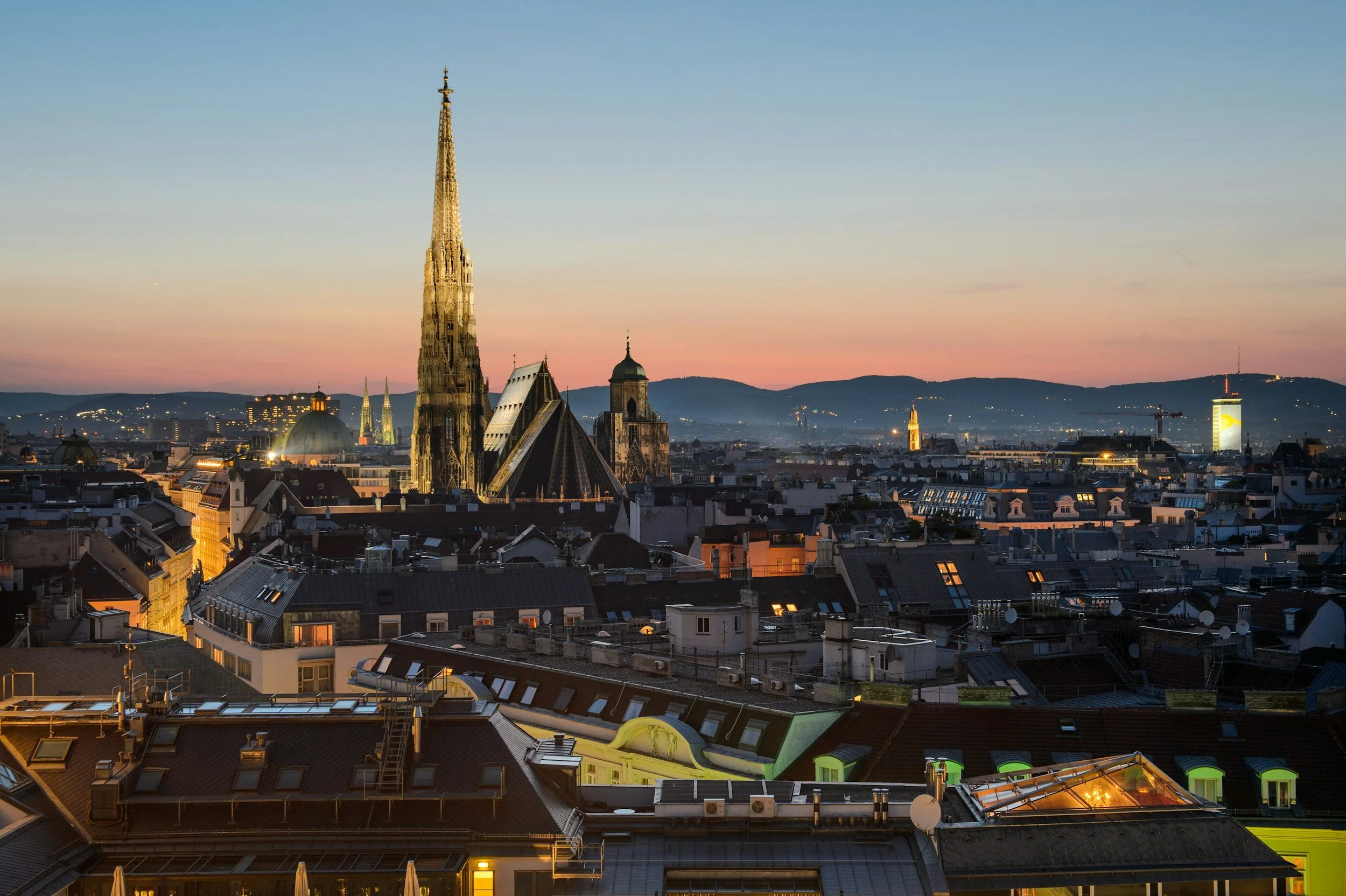
Vienna, a favorite place to add a night or two on a Danube cruise. (Stock photo)
My Biggest Piece of Advice
Don’t book a river cruise because you love cruising. Book it because you want to see the destinations. This isn’t about casinos or Broadway shows or giant pools. It’s about slowing down, meeting the locals, walking cobblestone streets, sipping wine where it was made and watching castles drift by from your balcony. It’s one of the most relaxing and immersive ways to experience the world, and once people take one river cruise, many never go back to touring Europe any other way.
Want to hear me talk through all of it? Watch the episode. And if you’ve been thinking about a river cruise, my team at Fabulous Adventures Travel and I would love to help you find the right itinerary and cruise line for your travel style and budget. If you’re planning other parts of your trip, my guide to getting around Europe is a great next read.
