
Let’s talk about the rookie mistakes Americans make in Europe. And listen, this is a judgment-free zone, because every single one of us has landed in Europe at least once acting like there should be an ice machine on every floor, ranch dressing is a human right and dinner should not begin at 9:30 p.m. Who eats dinner at 9:30 p.m.? You know who does? The Europeans. And I love it.
Europe humbles Americans fast, because we just don’t get it at first. But once you lean into the culture, you realize they got this right. We should be eating dinner at 9:30 and chilling. So here are the biggest mistakes Americans make overseas, what actually annoys locals and the habits that instantly make your trip smoother (and keep you from looking clueless). Europe is incredible, but only if you stop fighting Europe and let Europe be Europe.
Mistake #1: Trying to Do Europe in Seven Days
People tell me, “We’re doing London, Paris, Rome, Athens, Barcelona and Lisbon,” and the list goes on, all in eight days. No, you’re not doing Europe. You’re speed-running exhaustion.
I get it. You paid for a very expensive plane ticket, you flew eight hours or longer to get there, and you’re thinking, “Darn straight I’m getting it all in.” But you’ll be left wanting more: “I was in Paris for 4 hours. I saw three things in Rome. In London I only saw Big Ben.” Wander a bit more and take some time to enjoy the locals.
Americans also tend to underestimate the distances between places. “Look at the map, it’s so close, it’s like New York to Philadelphia.” Not the same. Train times add up too, so compare the door-to-door time of the train and a short flight before you commit.
Then there’s jet lag. I have cures for jet lag, but honestly, many people don’t feel like themselves until halfway through the week. And Europe is tiring. It’s a lot of walking, which is fantastic for your heart health, but if you’ve only done the World Showcase at Epcot, know that Europe is not Disney World. You’re going to be tired.
So pick fewer places, stay longer and actually enjoy where you are, because nothing says rookie traveler like needing a vacation after your vacation.
Mistake #2: Eating at the Wrong Places
If the restaurant has giant food photos, someone outside calling, “Hello, my friend, come in, come in,” or a menu in 14 languages, congratulations: you found the tourist trap.
Europe has amazing food, but Americans often panic when they’re starving and end up eating right next to the major landmarks. If you’re standing by Big Ben, the food right there is going to be expensive and not that good, because everyone set up shop there to make money. Go a couple of streets over. Just a couple. You’ll thank me.
The best restaurants often have no pictures on the menu. They might even have handwritten menus, where you wonder whether Grandma downstairs wrote it.

In much of Europe, dinner starts late and nobody rushes you out. The meal is the event.
Eating Dinner Too Early
Americans roll up to dinner at 5:30 while the restaurant staff is still emotionally preparing for the evening. In places like Spain, Italy and Greece, dinner is often much later. Show up at 5:30 and your waiter may be wondering what on earth you’re doing there.
Rushing the Meal
Europeans don’t inhale their food and leave. We’re conditioned to eat and give up the table for the next people in line. Europe isn’t like that at all, and it’s one of my favorite things about it. You can order one cup of coffee at a little café and nobody kicks you out. They also don’t bring the check unless you ask for it.
Americans are asking, “Can we get the check?” and Europeans are thinking, “Sir, you just sat down.” Food is a lifestyle, not a marathon, and they have some of the best food on the planet. So hang out and enjoy the moment.
Mistake #3: Thinking Europe Works Like America
This is where we get our bad reputation, guys. Europe is different. That’s literally the point. Here’s what to expect:
No free water. Americans lose their minds over paying for bottled water at the table. That’s what they drink over there. (My favorite is Acqua Panna.)
Tiny hotel rooms. Rooms for three or four people are few and far between, so families need to do their research or find a good travel advisor. Even American brands like Marriott, Hilton or Best Western still have European-style rooms.
Interesting showers. Often it’s a bathtub with a handheld wand and sometimes nothing to keep the water in, because you’re supposed to sit down, not stand up. Stand up and you’ve created a pool on the bathroom floor.
Fewer ice cubes. You’ll get two ice cubes, maybe three. Four means someone slipped. You can ask for more, and they’ll look at you like you’re crazier than crazy.
Slower service. Food is an event, not a moment to shovel it in and keep moving.
Limited air conditioning. If you can’t sleep in a hot box, check that your hotel has air conditioning, especially in summer.
Different plugs. The UK, France, Spain, Italy and Greece don’t all use the same plug, so check exactly which adapter you need for each country you’re visiting.
No giant to-go coffees. Coffee is an event too. Sit, watch people walk by and enjoy it. I hear the coffee is phenomenal (I don’t actually drink coffee).
My Disneyland Paris Air-Conditioning Story
I stayed at the Sequoia Lodge at Disneyland Paris one June and thought, it’s Disneyland, the air conditioning has to be good. Nope. The air was on, it felt like 80 degrees in the room, and I was sweating. We called the front desk to say the air wasn’t working, and the answer was basically, “Yep, it is. That’s our air conditioning.”
So if air conditioning matters to you, plan around it. Bring a portable fan, or one of those fans you wear around your neck, and remember that it will need the right plug too. Personally, I don’t bring a hair dryer. I use the hotel’s, because I’m not risking my Dyson on a different voltage.
Europe is not inconveniencing you. Europe simply did not design itself around American expectations, and honestly, that’s why people fall in love with it. Things move slower, meals take longer, people walk more, and there’s less obsession with rushing everywhere. At Disneyland Paris, I was practically the only person recording everything on my phone. People there were just living in the moment, and I think that’s a really cool feeling.
Mistake #4: Not Validating Your Train Ticket
This one gets Americans all the time. They buy the ticket and sit down proudly, thinking, “I figured it out. I’m on the right train.” Then a conductor appears like a European ninja and hands them a fine.
In many countries, certain train tickets must be validated before you board. Europe loves rules that are tiny, unspoken and financially devastating. So check how your ticket works before you get on.
Mistake #5: Packing Like You’re Moving Abroad
I am literally the worst packer on the planet. I pack at midnight the night before. Americans overpack for Europe like they’re preparing for every possible weather, emotional collapse and three possible weddings, and that’s exactly me: “It could be 50 at night and 80 during the day. I need jeans, shorts, a sundress, a sweater, a hat.” Meanwhile, Europeans are out there with one sleek carry-on and mysterious confidence, and we’re pushing heavy luggage over the cobblestones.
Here’s the truth: Europe punishes heavy luggage. Train stations, stairs, cobblestones and those tiny elevators, you guys. I was just in Paris, and it took us four trips to get our stuff upstairs, because the elevator fit three people but only one person with luggage. We were a hot mess, and I laughed so hard. Nothing builds character like dragging a 70-pound suitcase through Rome in July.
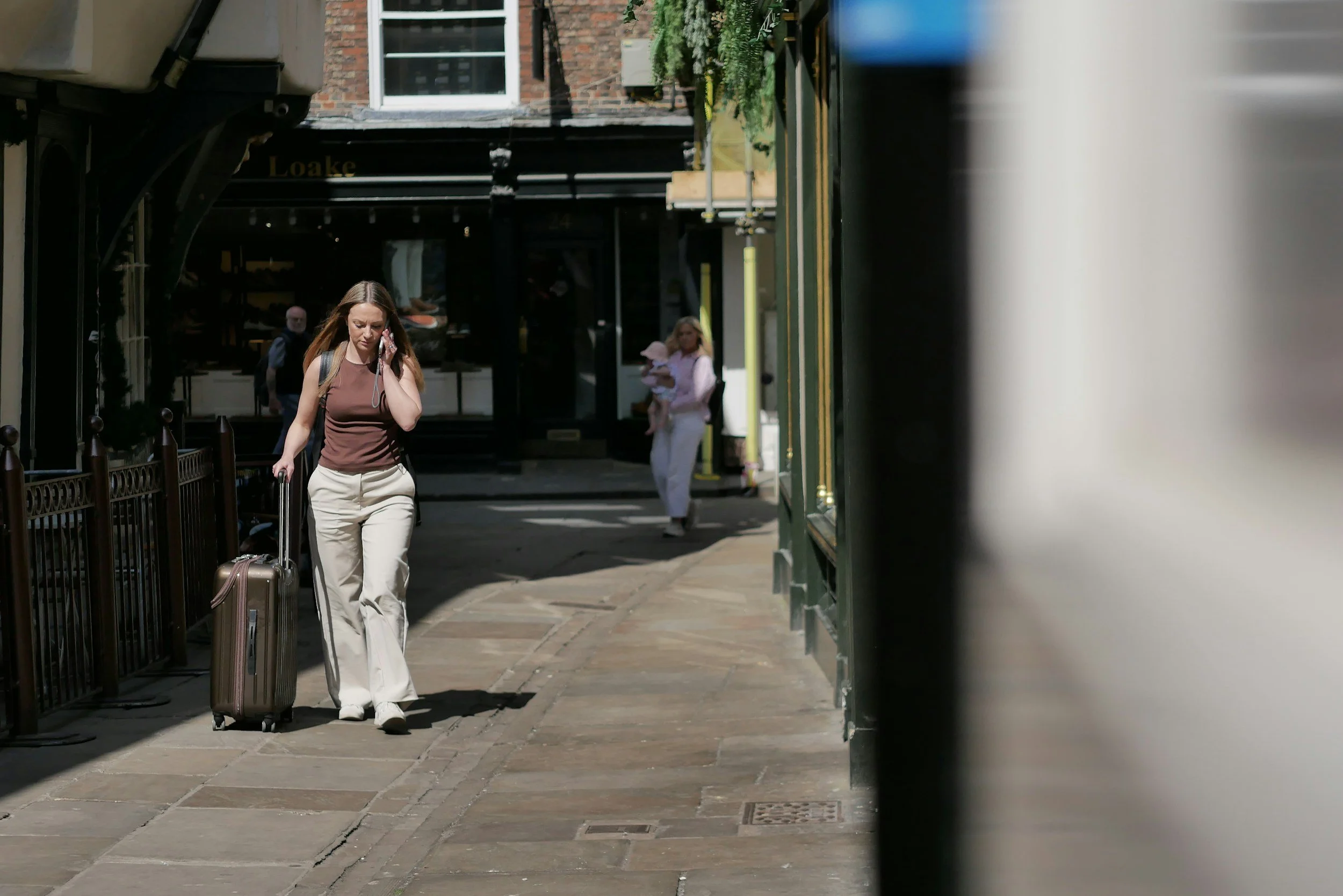
Europe punishes heavy luggage: stairs, cobblestones and tiny elevators. Pack lighter than you think.
You don’t need 11 pairs of shoes, a backup hair dryer or just-in-case jeans. You’ll wear your same favorite outfit repeatedly anyway. And please bring comfortable shoes over cute shoes. I know you want to look chic in a flowing sundress, but nobody cares. Be comfy. Trust me.
Mistake #6: Getting Confused About Money, Tipping and Bathrooms
Yes, some public bathrooms in Europe cost money. Keep coins on you, because carrying coins protects your bladder. (That should be a pin.)
Tipping is different too. American tourists either wildly overtip or forget to tip entirely. Many European countries already include service or pay wages differently than the US, so you don’t need to throw 20% at everyone out of panic. Look up the tipping customs for each country you’re visiting, and save yourself some money.
Mistake #7: Being Careless About Pickpockets
I don’t want to panic anybody. Europe is generally safe. But pickpocketing happens, and Americans are often shockingly trusting with their valuables because we’re just not used to it at home. Pickpockets work crowded metros, tourist squares and major train stations, and they target distracted tourists.
If someone asks you to sign something, spills something on you or suddenly becomes very helpful, pay attention. Don’t fall for it. And don’t announce yourself with a giant backpack, your phone hanging out and you standing in the middle of the sidewalk looking confused, which is the international symbol for “please rob me gently.”
Put nothing in your back pocket: not your phone, not your wallet.
Wear a cross-body bag (yes, the modern version of the ’80s fanny pack).
Choose a jacket or sweater with zippered pockets.
Keep your situational awareness. If someone is standing too close for comfort, move.
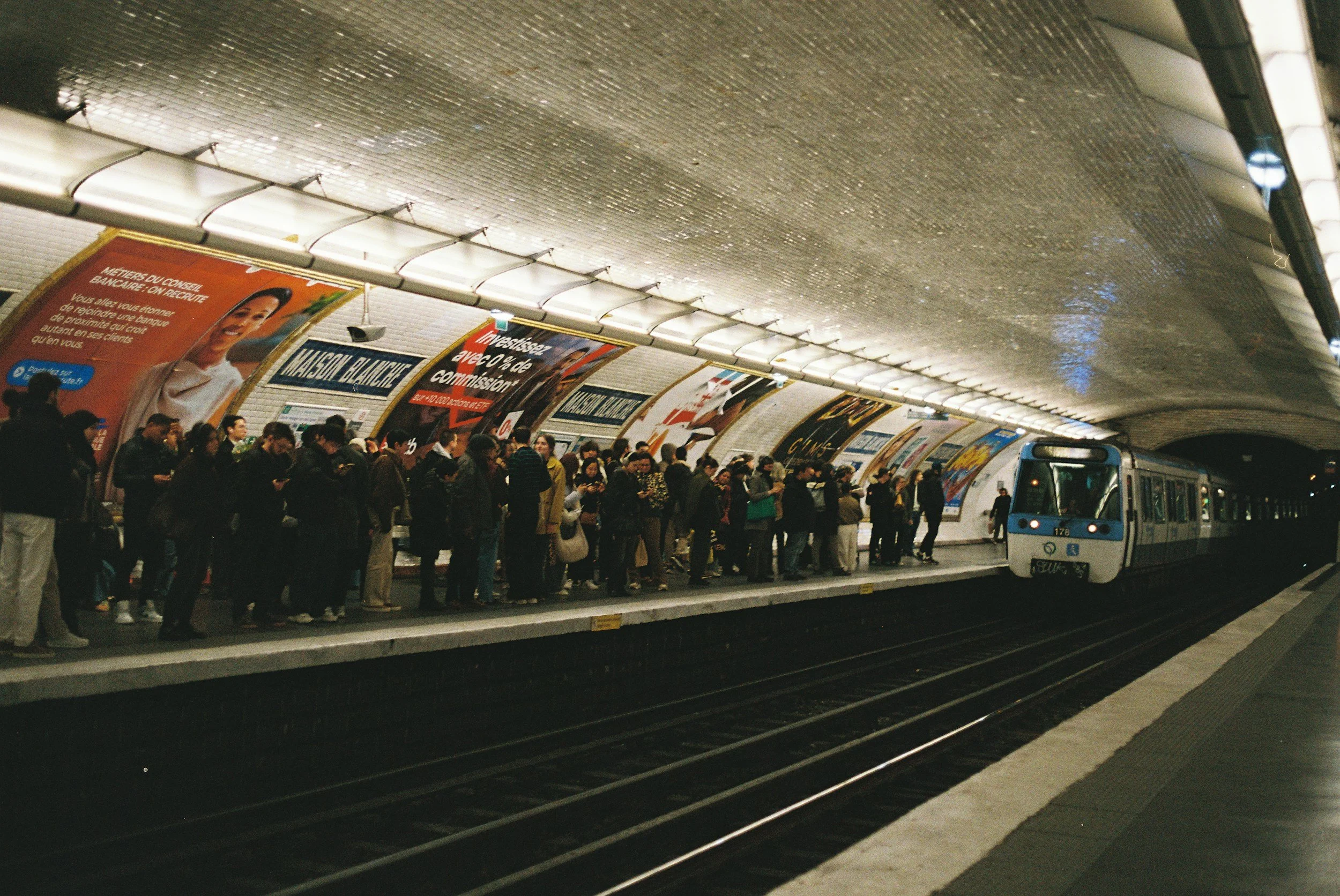
Crowded metros and train stations are where pickpockets work. Keep valuables zipped and in front.
Mistake #8: Skipping the Entry Requirements
This is a big one right now, and most people don’t know about it. You can’t get into England without an ETA, an Electronic Travel Authorisation, which you apply for on the UK government’s website or app. It’s quick, and once you have it, it lasts for a good while. Before I flew to London, I was already getting reminders about mine.
Europe is rolling out its own travel authorization too, so always check the entry requirements for every country on your itinerary well before you go. If you arrive and can’t get in, that is not going to be a good day.
Good to know (checked October 2026): US citizens visiting the UK need an approved ETA before travel. It costs £20 and is valid for two years or until your passport expires, whichever comes first. For most of mainland Europe (the Schengen area), the EU’s new Entry/Exit System (EES) now registers non-EU visitors with fingerprints and a photo at the border. The EU’s separate ETIAS travel authorization has been announced but has no start date yet, so you don’t need it today. Rules change, so confirm on official government websites before you travel. Sources: UK ETA (GOV.UK), EU Entry/Exit System and ETIAS timeline.
One more option: you can register your trip with the US State Department’s Smart Traveler Enrollment Program (STEP) when you travel abroad. If anything happens, they know you’re there.
The Biggest Mistake of All
The biggest mistake Americans make in Europe is trying to recreate America in Europe. Don’t do that. Don’t complain that things are different. Different is the whole magic. That’s why we all go there.
Take longer meals. Slow down. Wander (it’s my favorite) and get a little lost. Sit at a café and people-watch. Miss a train and survive anyway. The best Europe trips happen when you stop trying to control every second.
And if you’d like help planning a Europe trip that leaves room to actually enjoy it, my team at Fabulous Adventures Travel would love to help.
