
Close your eyes for a second. If I say the Cotswolds, what do you see? Do you even know where it is? (It’s in England, about a two-hour drive-ish from London, depending on where you go.) You see golden stone cottages, ivy creeping up the walls, wildflowers everywhere, pristine little streams and about 400 tourists holding selfie sticks, blocking the view of Arlington Row in Bibury.
Listen, I love a good postcard moment as much as the next girl. But let’s be real: when a destination gets that popular, the magic can get a little swallowed up by the tour buses. If you’re looking for the authentic, sleepy, time-capsule version of old England, the kind where you can actually hear the birds chirping (and trust me, you do) and sit in the pub getting to know the guy who lives in a town that hasn’t changed since the 1700s, you have to look past the Google results. So I’m going to give you the places that still feel like old England, plus the touristy ones you shouldn’t miss anyway. Grab a cup of tea, or a gin and tonic (no judgment here), and let’s dive in.
Remember: People Live Here
Before we go anywhere, a quick word. A lot of these towns weren’t built for crowds of visitors to come and hang out in. They’re real towns, and people live in them. In Bibury, everyone comes to see the Arlington Row houses, there are people everywhere, and there are signs that say keep off the grass, because those are private homes. They’re just so gorgeous that everyone wants a picture. I can’t imagine living there with someone outside taking photos of my house year-round, not just at Christmas when you put up a good light display. Some of the smaller villages you can barely get into, down tiny, tiny roads. Be a good guest.
Villages That Still Feel Like Old England
Stanton
If you want a village that looks like it was frozen in amber, head to Stanton. It’s built almost entirely from that iconic honey-colored Cotswold stone, and there are virtually no commercial shops, so it’s pure, uninterrupted history. Walk up the main street to the Mount Inn at the top of the hill, grab a pint and look out over the Vale of Evesham. It is stunning.
Snowshill
Snowshill is just down the road from Stanton, tucked away on top of the escarpment, and it’s tiny. You take a single-lane street into it that still has to go both ways, and the driving I did there was definitely interesting. It’s famous for Snowshill Manor, which is absolutely beautiful and houses one of the most eccentric collections of everything you’ve ever seen, collected by a man named Charles Wade.
But if you think you’re walking the village, going to the shops, visiting the coffee shop or the chocolate shop, that’s not happening in Snowshill. There was a tiny covered market outside, and that was really it. We did eat at the pub (it’s the only one), and the food was phenomenal, with a beer garden outside and great parking. You blink, it’s gone. You’ve missed it. But it’s gorgeous, and it’s where you want to stay if you’re after that authentic feeling of living in the English countryside.
Right outside Snowshill are the lavender fields: miles and rolling hills of purple lavender farms. It’s really, really neat. Just know that getting there from the pub is not for the faint of heart. On those single-lane roads, you’re pulling over into the bushes to let people by, they’re pulling into the bushes to let you by, there are corners you can’t see around and you’re driving on the other side of the road. It’s a little nerve-wracking by the time you’re done.
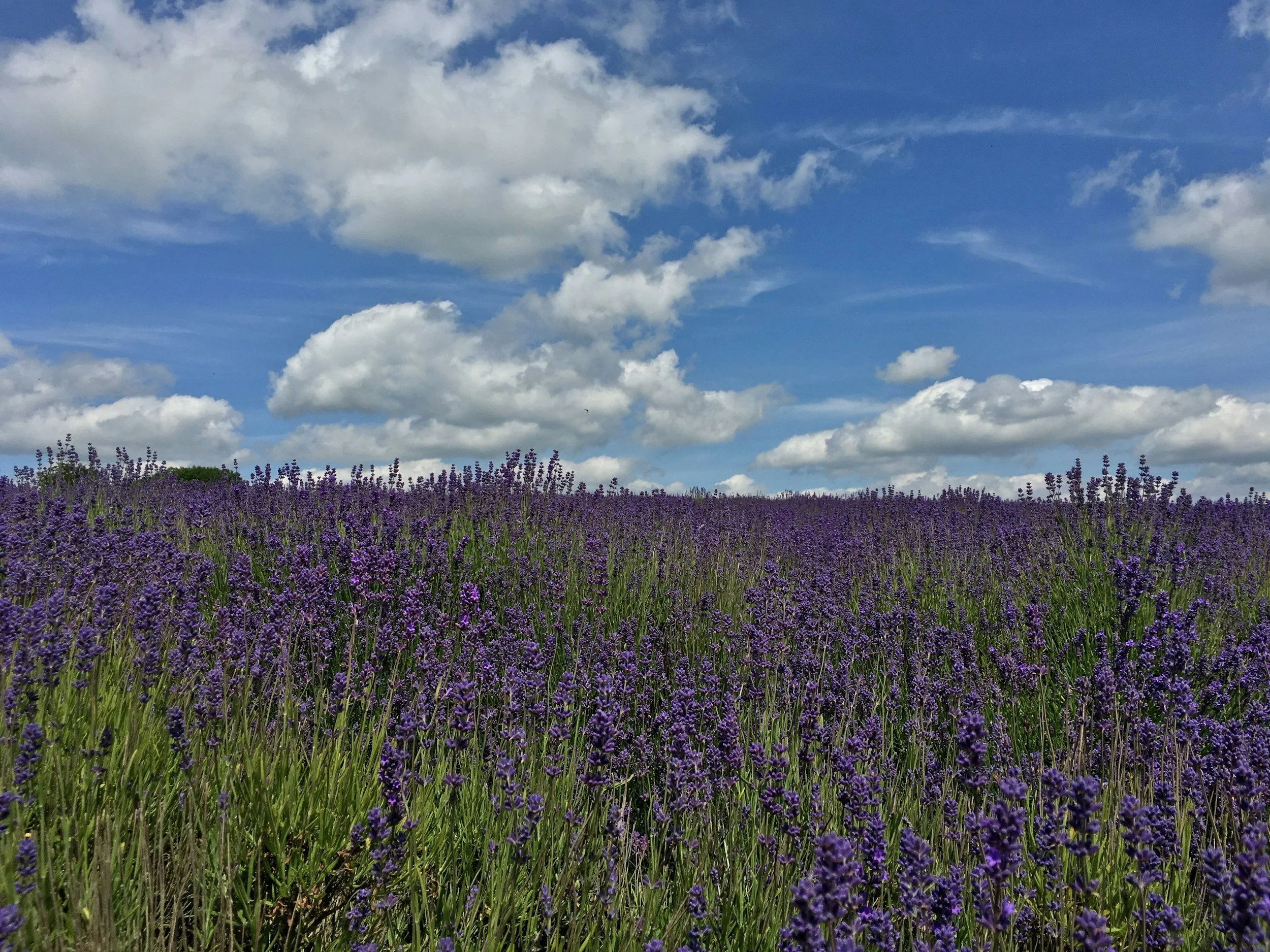
Rolling purple lavender is a summer-only sight, so time your visit for June to early August.
Good to know (checked October 2026): Cotswold Lavender is a summer attraction. In 2026 it was open daily from June 11 to August 5, and it’s due to reopen in mid-June 2027. Standard tickets are bought by card on arrival rather than booked ahead. Source: Cotswold Lavender.
Naunton
Naunton is tucked away in a valley shaped by the River Windrush and completely bypasses the main tourist tracks. It has a magnificent 15th-century church and the Black Horse Inn, and you’re more likely to rub elbows with local farmers than fellow tourists. Like the last two, it’s tiny. There are no tour buses at these three, because the streets are way too small. I could barely drive down them in a large SUV, and I was panicking. There’s no way a tour bus is getting down there.
Chipping Campden
Chipping Campden used to be a major player in the medieval wool trade, but somehow it got left off the modern, frantic tourist route. Thank God. People know it, but they often just drive through the high street. The real magic is found when you park the car and explore the almshouses built in 1612, or walk down to the Market Hall. If you go early in the morning, when the mist is still rising, it feels incredibly atmospheric.
Blockley: Where We Stayed
My dream was to come to the Cotswolds for about two weeks and just live in the English countryside, and we rented two different houses. The first was in Blockley, a little town that used to be a bustling center of the silk industry, powered by the local brooks. Today those old mills are beautiful private homes, and we stayed in one of them.
Here’s something I love: in the Cotswolds, they name their houses. Every house has a name, like the Fleece House or Sunnyside. Ours was called The Mill, and it was part of an old mill. It was stunning: three floors, wood lining the ceilings, exposed stone and a wood fireplace. The French doors opened onto the stream that fed the mill, and the sound of the water and the birds was heavenly. A two-level backyard overlooked the whole town.
I really recommend Blockley, and here’s why: it’s tiny, and it’s so hilly that the big tour buses physically can’t navigate the turns. The Great Western Arms was right up the hill from us, so we’d walk up for dinner or a drink. They’ve even turned the old red telephone box into a book exchange. There are also lots of footpaths (that’s what they call walking trails), and our house came with a walking stick. We only stayed four nights, and I wish we’d stayed longer.
Painswick
Painswick is known as the Queen of the Cotswolds. It’s built from a lighter, silvery-gray stone rather than the deep honey color, and it’s famous for its churchyard, which contains 99 yew trees. Legend says the devil won’t let a hundredth tree grow. I think that’s a cute little story. The narrow, winding lanes feel incredibly grand yet totally peaceful.
The Slaughters
This one made the not-so-touristy list, but it was super busy when I was there, and there are no big parking areas, so finding a space was very hard. Know that going in. People love Lower Slaughter for the old mill on the stream, which is beautiful. You can even go horseback riding: my daughter and my mom rode through the stream, and they’ll take you through Lower Slaughter and back. If horseback riding is your thing, I highly suggest it.
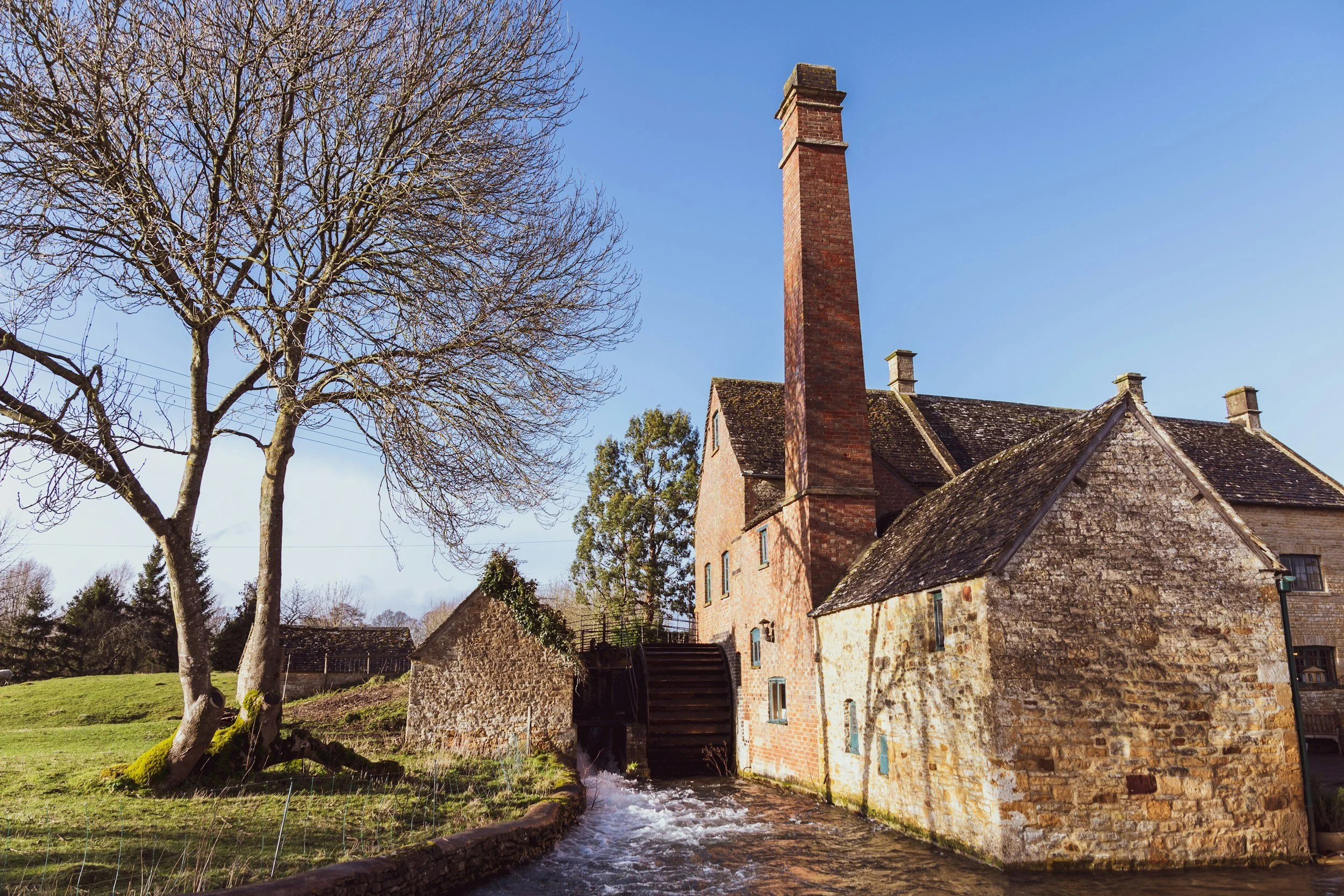
The Old Mill at Lower Slaughter. For quieter lanes, walk the river path to Upper Slaughter.
If you want to escape the crowds, walk the river path to Upper Slaughter. It’s much quieter, bypassed by the main roads, with an atmosphere of absolute, undisturbed tranquility. It hasn’t seen any new building work since the early 1900s. We had English afternoon tea at The Slaughters Manor House, and that hotel is unbelievable. They did a fabulous job with a traditional afternoon tea. And the Slaughters are super close to Bourton-on-the-Water, so you can technically do both at the same time.
The Touristy Ones You Shouldn’t Miss
Bourton-on-the-Water
I know I always tell you to stick to off the beaten path. Bourton-on-the-Water is super popular, and you’re going to find a ton of tour buses there, but that doesn’t mean don’t go. Who cares about the crowd? It’s phenomenal. It’s set on a beautiful stream (hence “on the water”), and it’s much bigger than the little villages, with lots of people living there as well as visiting.
Eat and drink: we had a lovely lunch there this year. The Bourton-on-the-Water bakery is amazing, and the Duke of Wellington is one of the favorite pubs.
The Model Village: a perfect replica of Bourton-on-the-Water. When you’re walking through it, you think, wait, this literally is it, just tiny. Then there’s a model of the model, and a model of the model of the model, which is so cute. You do have to pay for it, but it’s a lot of fun.
The motor museum: really cool if that’s your thing.
Shopping: there’s a lot of it.
Bibury and Arlington Row
Bibury is a very quick stop, and most people come just for Arlington Row. It was built in the late 14th century as a wool store and converted into weavers’ cottages in the 17th century. Those steeply pitched roofs are so iconic that they’re featured inside the official British passport. It was so cool to see in person, and for some crazy reason, it made me think of Harry Potter. (Listen, everywhere you walk in England reminds you of Harry Potter. But this really did.)
Broadway
I almost forgot Broadway, but oh, it was darling.
Walk a Piece of the Cotswold Way
For the active travelers: the Cotswolds isn’t just about driving from tearoom to tearoom. If you love hiking, check out the Cotswold Way, a 102-mile national trail that runs from Chipping Campden all the way down to the historic city of Bath. You don’t have to do the whole thing, of course. Walking even a three-mile stretch between villages gives you panoramic views of rolling hills, ancient woodlands and the grazing sheep that define this landscape. I got to do a little piece of it when we were walking between Bourton-on-the-Water and the Slaughters. Do it just to say you did.
Where to Eat and Drink
If you think English food is stuck with its 1970s reputation, the Cotswolds will completely change your mind.
Afternoon Cream Tea (and the Great Scone Debate)
Warm, freshly baked scones, clotted cream and strawberry jam. I like jam first, then cream. I think it tastes best that way. But there’s a great debate out there, and I always giggle about it: according to my friends, Devon style is cream first and Cornwall style is jam first. For me? Just put it in your mouth. That’s how good it is.
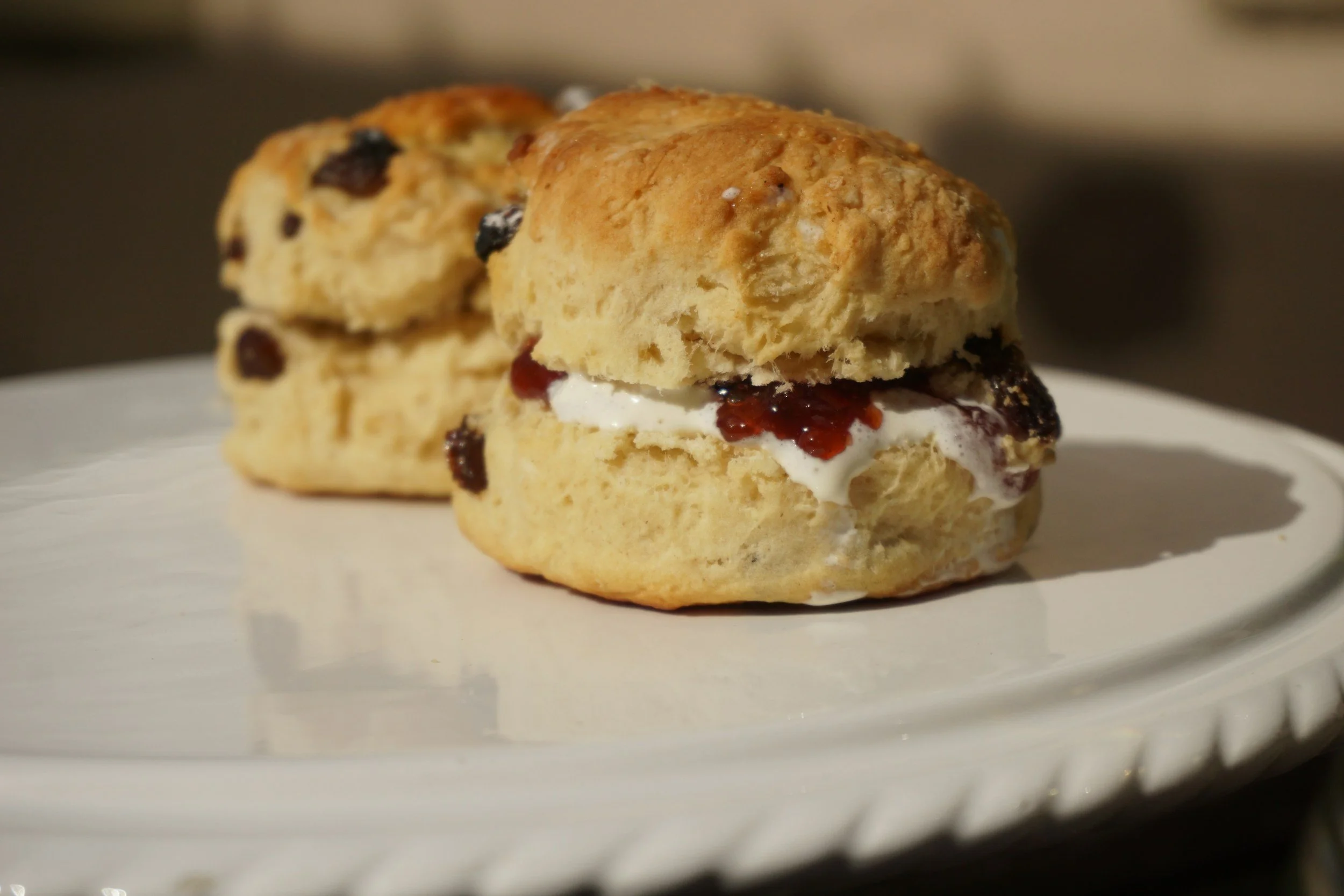
Jam first or cream first? Samantha’s answer: just put it in your mouth.
For an unforgettable tea experience, visit Huffkins. They’ve been baking since 1890, and their cakes and warm scones are legendary. There’s one in Stow-on-the-Wold and one in Burford.
The Porch House
In Stow-on-the-Wold, the Porch House is recognized as the oldest inn in England, dating back to 947 AD. Think about that for a second: people have been having a drink in that exact spot for over a thousand years. That’s nuts. I got to eat there, and the food was really great.
The Wild Rabbit and Daylesford Organic Farm
If you want something more modern and upscale, the Wild Rabbit in Kingham is a Michelin-recommended gastropub, and it’s gorgeous. It sources organic, locally produced ingredients from nearby Daylesford Organic Farm, which you also shouldn’t miss. I don’t want to call Daylesford a grocery store, because it’s not. It’s a farm store, with places to sit down and have a meal. The meat comes straight from the farm to your table, and it was so stinking good. We took a bunch of it home to the cottage we were renting.
Practical Tips for Planning Your Trip
Rent a Car (and Be Brave)
You can take a train from London into Moreton-in-Marsh or Cheltenham. Every time the locals heard our accents, they’d ask, “Did you take the train?” And we’d say, “No, we drove.” “You drove?” Yep, we drove. To truly explore the smaller villages, renting a car is best, because once you’re here, you’re not getting around otherwise. Just remember to drive on the left, and be prepared for narrow, single-track country lanes. Some are dirt roads with huge potholes where the car barely fits. You can understand why I was panicking down those roads.
Stay Close to What You Want to See
The Cotswolds is a very big area of little towns, and they’re spread out, because it’s the country. Between towns can be 20 minutes, so hopping from one to the next to the next can take a while. Make sure you stay close to the things you want to see.
The first time I came through, we drove up from Bath and stayed at the Hare and Hounds, an absolutely gorgeous hotel that I highly suggest. Just know that it’s farther south, right where the Cotswolds starts, so it’s not very central. On this trip, after Blockley, we moved to Stow-on-the-Wold, which I call city living. (If you’re used to a real city, like all of us here in Orlando, it’s nothing like city life. But compared with Blockley, Snowshill and Stanton, Stow-on-the-Wold and Bourton-on-the-Water are so much bigger.)
Skip Summer: Go in Spring or Autumn
In summer, it’s stifling, and there’s no air conditioning anywhere. The weather was great at the beginning of our trip, and then a heat wave hit. Oh my, it was so hot. And don’t think you’ll just escape to the local pub. They don’t have air conditioning either, because the pub was built a thousand years ago.
So come in spring. May is a great time. Remember what I always say about shoulder season: it helps with the crowds, the cost of staying here and, of course, the weather. Autumn should be beautiful too, with all the leaves turning. I can’t even imagine what it looks like then.
Slow Down
Don’t try to see ten villages in one day. Visit one village a day and really enjoy it, or two if they’re near each other. Take a mini trip to Bath if you haven’t been. Sit on a bench, watch the ducks and talk to the locals. They’re so sweet, very helpful and they love having a conversation. The magic of the Cotswolds isn’t about checking things off a list. It’s about adopting a slower, gentler pace of life.
And tell me: how do you take your scone? If the Cotswolds is calling, my team at Fabulous Adventures Travel would love to help you plan where to stay, how long to linger and which villages to see.
